
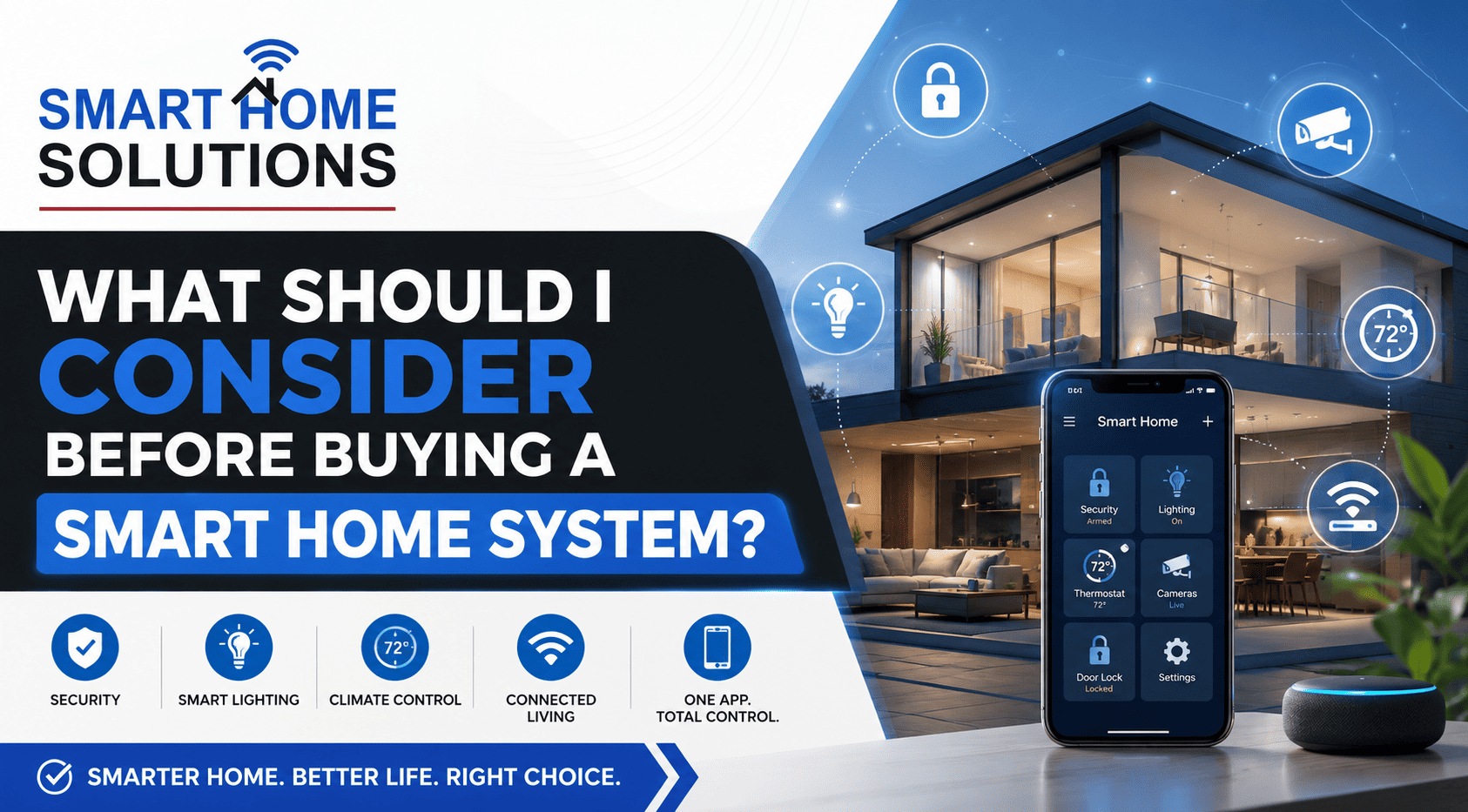
When buying a smart home system, it is important to understand your needs, budget, and long-term usability before investing in automation technology. A smart home setup is not just about convenience; it also improves security, energy efficiency, and lifestyle comfort.
Today, many homeowners are exploring Home Automation Basics to transform traditional houses into connected living spaces. However, without proper planning, users often face issues like device incompatibility, hidden installation costs, and limited scalability. That is why careful evaluation is essential before making a purchase decision.
Home Automation Basics for Smart Living Setup
Understanding Home Automation Basics is the first step before choosing any system. A smart home system works by connecting devices such as lights, ACs, security cameras, door locks, and appliances through a central control hub or mobile application.
Key components include:
- Smart hub or controller
- Wi-Fi or Zigbee/Z-Wave connectivity
- Smart sensors and devices
- Mobile or voice control system
A well-designed automation system ensures that all devices communicate seamlessly, allowing users to control their home remotely and efficiently.
Smart Home Automation Features You Must Check
Before finalizing a system, it is important to evaluate essential Smart home automation features that match your lifestyle needs.
Important features include:
- Voice control integration (Alexa, Google Assistant)
- Remote access through mobile apps
- Automated lighting and climate control
- Security alerts and real-time monitoring
- Energy usage tracking and optimization
A smart system should not only offer convenience but also adaptability for future upgrades and device expansion.
Smart Home Installation Cost in India Explained
One of the most important considerations is Smart home installation cost. The pricing varies depending on home size, number of devices, brand selection, and level of automation required.
General cost factors include:
- Basic automation (lights, switches, fans control)
- Mid-level automation (security + appliances control)
- Advanced automation (fully integrated smart home ecosystem)
Installation costs in India can differ widely based on customization and technology used. It is important to plan a budget that includes both device cost and installation charges to avoid unexpected expenses.
Home Automation Cost in India Budget Factors
The Home Automation Cost in India depends on multiple elements that influence the total investment:
1. Type of Smart Devices
High-end devices with AI features cost more than basic smart switches or plugs.
2. Size of the Property
Larger homes require more devices, sensors, and wiring, increasing total cost.
3. Brand and Technology
Premium brands offer better reliability, security, and long-term support.
4. Installation Complexity
Wired systems are more expensive compared to wireless plug-and-play solutions.
Understanding these factors helps in planning a realistic budget before investing in automation technology.
Smart Home Benefits for Modern Households
The growing popularity of automation is mainly due to strong Smart home benefits that improve everyday living experience.
Key benefits include:
- Enhanced home security and surveillance
- Energy savings through automated control
- Remote access from anywhere
- Increased convenience and comfort
- Better control over appliances and systems
Smart homes are not just a luxury anymore; they are becoming a practical solution for modern urban lifestyles.
Choosing Right System Before Buying a Smart Home System
When buying a smart home system, selection should be based on compatibility, scalability, and user-friendliness.
Important points to consider:
- Ensure device compatibility across brands
- Check system scalability for future upgrades
- Evaluate app usability and interface
- Confirm warranty and after-sales support
- Verify security encryption standards
A well-planned system ensures long-term satisfaction and reduces the need for frequent upgrades or replacements.
Common Mistakes to Avoid in Smart Home Setup
Many users make mistakes during installation and planning that affect performance and usability.
Avoid:
- Buying devices without compatibility checks
- Ignoring internet speed requirements
- Overlooking installation quality
- Choosing low-quality budget systems
- Not planning for future expansion
A structured approach ensures a smooth and efficient smart home experience.
Smart Home Solution Approach to Automation Systems
A structured approach to automation focuses on long-term usability and system integration. Smart Home Solution emphasizes designing systems that are scalable, secure, and user-friendly.
The focus is on delivering reliable automation setups that combine comfort, safety, and energy efficiency for modern households. Proper planning ensures that homeowners get maximum value from their investment.
Future Trends in Home Automation Basics
The future of Home Automation Basics is driven by AI, machine learning, and IoT integration. Smart homes are evolving to become more predictive and automated.
Upcoming trends include:
- AI-based energy optimization
- Advanced biometric security systems
- Fully voice-controlled environments
- Smart predictive maintenance for devices
These innovations will make smart homes more intelligent and self-managing in the coming years.
Conclusion
Before investing in automation, understanding buying a smart home system process is essential for long-term value. With proper planning, awareness of costs, and selection of the right features, homeowners can build a secure and efficient smart living environment that improves comfort and lifestyle quality.
Frequently Asked Questions (FAQs)
1. What should I consider before buying a smart home system?
You should consider compatibility, budget, installation cost, features, and scalability before selecting a smart home system.
2. What are Home Automation Basics?
Home automation basics include smart devices, central control systems, sensors, and mobile or voice-based control for managing home functions.
3. How much is Smart home installation cost in India?
The cost varies based on home size, devices used, and level of automation, ranging from basic to advanced setups.
4. What are the main Smart home benefits?
Smart home benefits include energy savings, improved security, remote access, and enhanced convenience in daily life.
5. Are Smart home automation features customizable?
Yes, most systems allow customization based on user needs, lifestyle, and future expansion requirements.