
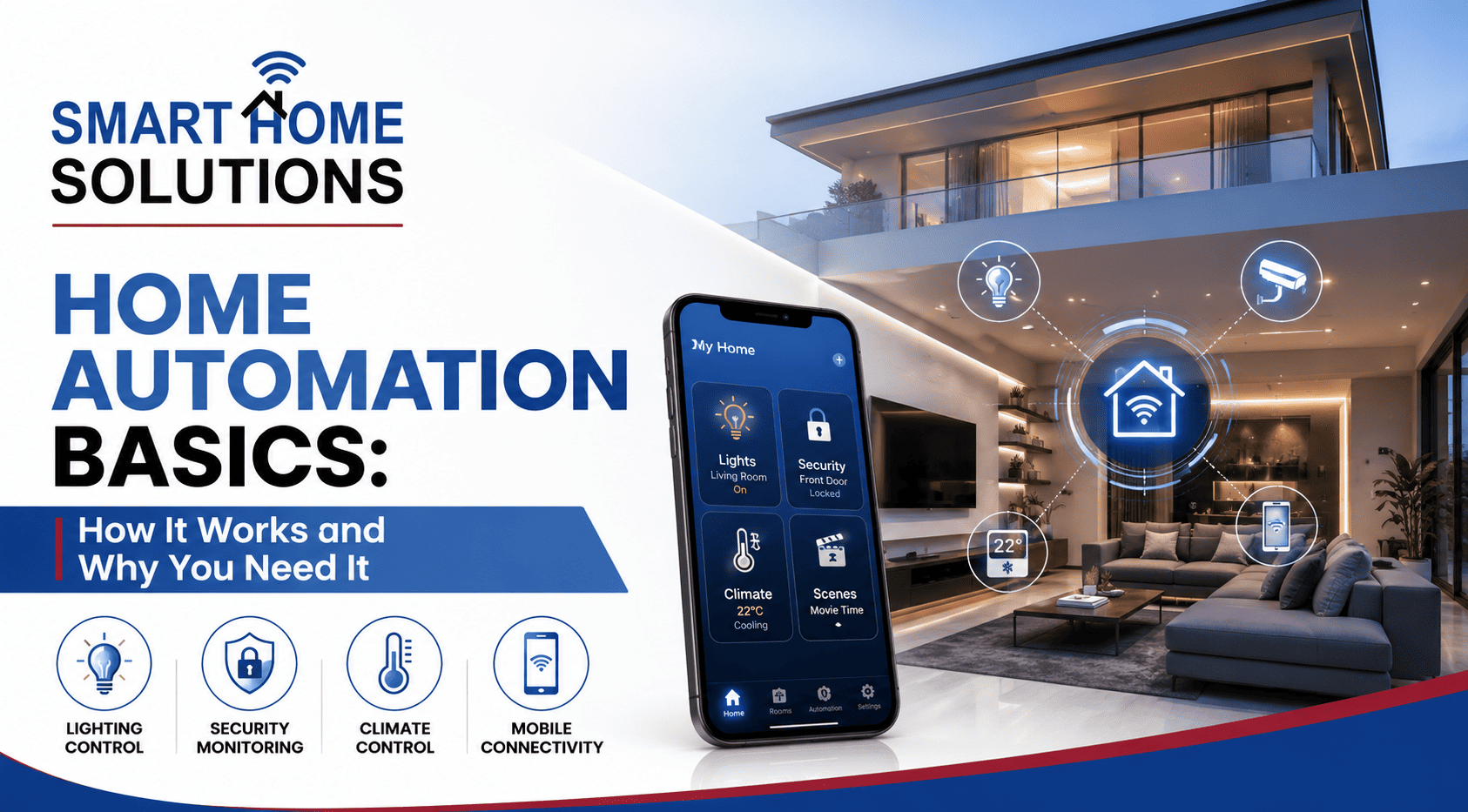
Technology is transforming the way we live, and one of the biggest changes is the rise of smart homes. Understanding Home Automation Basic concepts can help homeowners make informed decisions about improving comfort, security, convenience, and energy efficiency. Whether you live in an apartment or a large villa, modern Home Automation systems make daily living easier by connecting and controlling devices through a single platform.
Today, homeowners are looking for smarter ways to manage lighting, security, entertainment, appliances, and energy consumption. A reliable Home Automation Solution allows you to control your home from anywhere while improving safety and reducing unnecessary power usage. As smart technology becomes more accessible, more families are choosing intelligent automation for their homes.
Understanding What Makes a Home Truly Smart?
A smart home is a residence where devices and systems communicate with each other through an internet connection, wireless protocols, or centralized controllers. Instead of manually operating lights, curtains, air conditioners, security cameras, or appliances, homeowners can manage them through smartphones, voice assistants, touch panels, or automated schedules.
In a smart home, devices work together to create a seamless living experience. For example:
- Lights turn on automatically when you enter a room.
- Air conditioning adjusts based on room temperature.
- Security cameras send instant alerts to your phone.
- Curtains open and close according to the time of day.
- Entertainment systems can be controlled with a single command.
The goal of automation is not simply adding technology but making everyday life more convenient, efficient, and secure.
How Modern Home Automation Systems Actually Work?
At its core, home automation relies on four key components:
1. Smart Devices
These include smart switches, sensors, cameras, door locks, thermostats, curtains, speakers, and appliances.
2. Sensors
Sensors collect information such as motion, temperature, humidity, occupancy, and light levels.
3. Central Controller
The controller acts as the brain of the system. It processes data from devices and sensors and executes commands.
4. User Interface
Users interact with the system through:
- Mobile applications
- Voice assistants
- Touch panels
- Remote controls
Simple Example of Automation
Imagine you arrive home in the evening:
- Motion sensors detect your presence.
- Smart lights automatically switch on.
- Curtains close for privacy.
- Air conditioning adjusts to your preferred temperature.
- Security systems deactivate for authorized entry.
All these actions happen automatically without requiring multiple manual operations.
Basic Home Automation Workflow
| Component | Function |
|---|---|
| Sensors | Detect activity and environmental changes |
| Controller | Processes information and makes decisions |
| Smart Devices | Execute commands |
| Mobile App | Allows remote control and monitoring |
| Internet Connectivity | Enables communication between devices |
This interconnected system creates a smarter and more responsive living environment.
Essential Areas of Your Home You Can Automate
One of the biggest advantages of automation is flexibility. Homeowners can automate specific areas or their entire property.
Smart Lighting Control
Lighting automation allows users to:
- Schedule lights
- Dim brightness levels
- Create mood settings
- Turn lights off remotely
- Reduce electricity consumption
Smart lighting is often the first step homeowners take toward automation because of its convenience and energy-saving benefits.
Home Security and Surveillance
Security remains one of the strongest reasons for investing in automation.
Features may include:
- Smart door locks
- Video door phones
- Motion detection cameras
- Intrusion alerts
- Remote monitoring
Homeowners can receive real-time notifications and monitor their property from virtually anywhere.
Climate and Comfort Management
Automation helps maintain ideal indoor conditions by controlling:
- Air conditioners
- Fans
- Ventilation systems
- Temperature settings
This improves comfort while reducing unnecessary energy consumption.
Entertainment and Media Systems
Smart entertainment allows centralized control of:
- Televisions
- Home theatres
- Speakers
- Streaming devices
Users can create customized scenes such as Movie Mode, Party Mode, or Relaxation Mode with a single tap.
Smart Curtains and Blinds
Automated curtains can:
- Open at sunrise
- Close during peak heat hours
- Improve privacy
- Enhance energy efficiency
Appliance Automation
Many daily-use appliances can become smarter through automation, including:
- Water heaters
- Kitchen appliances
- Washing machines
- Air purifiers
- Pumps
These systems help homeowners save time while improving convenience.
Home Automation Options for Different Property Types
Modern automation solutions can be customized according to property size and lifestyle requirements.
2BHK Apartment Automation
For smaller families and urban homeowners, 2bhk Apartment Automation provides practical smart living features without requiring extensive infrastructure.
Common automation features include:
| Feature | Benefits |
|---|---|
| Smart Lighting | Energy savings and convenience |
| Smart Door Lock | Enhanced security |
| Voice Control | Hands-free operation |
| Smart AC Control | Improved comfort |
| Video Door Phone | Better visitor management |
This setup offers an affordable entry point into smart living.
3BHK Apartment Automation
A larger apartment generally requires additional control zones and integrated systems.
Typical features include:
- Multi-room lighting control
- Security integration
- Entertainment automation
- Smart curtain systems
- Centralized mobile control
With 3bhk Apartment Automation, homeowners enjoy greater personalization and convenience across multiple rooms.
Independent House and Villa Automation
Owners of an Independent House and Villa often require more comprehensive automation systems.
These may include:
- Gate automation
- Landscape lighting
- Perimeter security
- CCTV integration
- Multi-floor automation
- Energy management systems
- Smart irrigation control
Larger properties benefit significantly from centralized management and advanced security features.
Is Smart Home Automation Difficult to Install and Use?
A common misconception is that automation systems are complicated and difficult to operate.
In reality, modern systems are designed for simplicity.
Most users can:
- Control devices through intuitive mobile apps
- Use voice commands
- Create schedules easily
- Access remote controls from anywhere
Professional installation ensures smooth integration and proper configuration. Once set up, daily operation becomes straightforward even for users with limited technical knowledge.
Common Myths vs Reality
| Myth | Reality |
|---|---|
| Automation is complicated | Most systems are user-friendly |
| Only luxury homes need automation | Homes of all sizes can benefit |
| Smart homes are difficult to maintain | Modern systems require minimal maintenance |
| Automation is too expensive | Flexible options suit various budgets |
| Technology replaces manual control | Manual controls remain available |
As technology evolves, smart home systems continue becoming easier and more affordable.
How to Select the Best Home Automation Partner?
Choosing the right automation provider is one of the most important decisions in your smart home journey.
Look for providers that offer:
Customized Solutions
Every home has unique requirements. Avoid one-size-fits-all packages.
Reliable Technology
Choose systems that are stable, scalable, and compatible with future upgrades.
Professional Installation
Proper installation ensures long-term performance and reliability.
After-Sales Support
Ongoing support is essential for maintenance, upgrades, and troubleshooting.
User-Friendly Interfaces
The system should be simple enough for every family member to use comfortably.
Companies like Smart Home Solutions focus on delivering tailored automation experiences designed around the homeowner’s specific lifestyle and property requirements.
Why Smart Home Adoption Is Growing Across India?
India’s smart home market has witnessed significant growth in recent years. Several factors are driving this trend.
Increasing Smartphone Usage
As smartphone adoption increases, homeowners become more comfortable controlling household devices digitally.
Rising Focus on Home Security
Security concerns encourage homeowners to invest in connected cameras, smart locks, and monitoring systems.
Greater Awareness of Energy Efficiency
Automated systems help reduce electricity consumption by optimizing lighting, cooling, and appliance usage.
Expansion of Smart Residential Projects
Builders and developers are increasingly integrating automation features into modern residential projects.
Improved Accessibility
Technology that was once considered premium is now available to a much wider audience.
As a result, House Automation is rapidly becoming a practical investment rather than a luxury feature.
Many homeowners now view automation as a long-term solution for improving convenience, safety, and property value.
Final Thoughts on Smart Home Living Benefits
Home automation is no longer limited to futuristic concepts or luxury residences. Today, it offers practical benefits for apartments, villas, and independent homes alike.
From intelligent lighting and advanced security to energy savings and remote control, a modern Home Automation Solution helps simplify everyday living while enhancing comfort and efficiency.
Whether you’re considering 2bhk Apartment Automation, 3bhk Apartment Automation, or automation for an Independent House and Villa, the right system can transform the way you interact with your home.
As technology continues to evolve, smart living is becoming the new standard for modern homeowners. Investing in automation today can provide long-term convenience, security, and peace of mind for years to come.
Frequently Asked Questions About Home Automation
1. What is home automation and how does it work?
Home automation connects devices such as lights, security systems, appliances, and climate controls through a centralized platform. Users can control these devices using mobile apps, voice assistants, schedules, or automated triggers.
2. Is home automation suitable for apartments?
Yes. Smart home systems can be customized for apartments of all sizes, including 2BHK and 3BHK configurations. Solutions can be scaled according to budget and requirements.
3. Can I control my home when I am away?
Yes. Most modern automation systems allow remote access through smartphones, enabling users to monitor and control devices from virtually anywhere with an internet connection.
4. Does home automation help save electricity?
Absolutely. Automated lighting, smart climate control, occupancy sensors, and scheduling features help reduce unnecessary energy consumption and improve efficiency.
5. Is home automation a good investment for homeowners?
Yes. Besides improving convenience and security, automation can increase property appeal, support energy savings, and enhance the overall living experience, making it a valuable long-term investment.
6. What is the average home automation cost in India?
Home automation costs in India vary depending on the property size, the number of devices, and the level of automation required. A basic setup for a 2BHK apartment can start from around ₹50,000, while advanced systems for larger apartments, villas, or independent houses may range from ₹2 lakh to ₹10 lakh or more.