
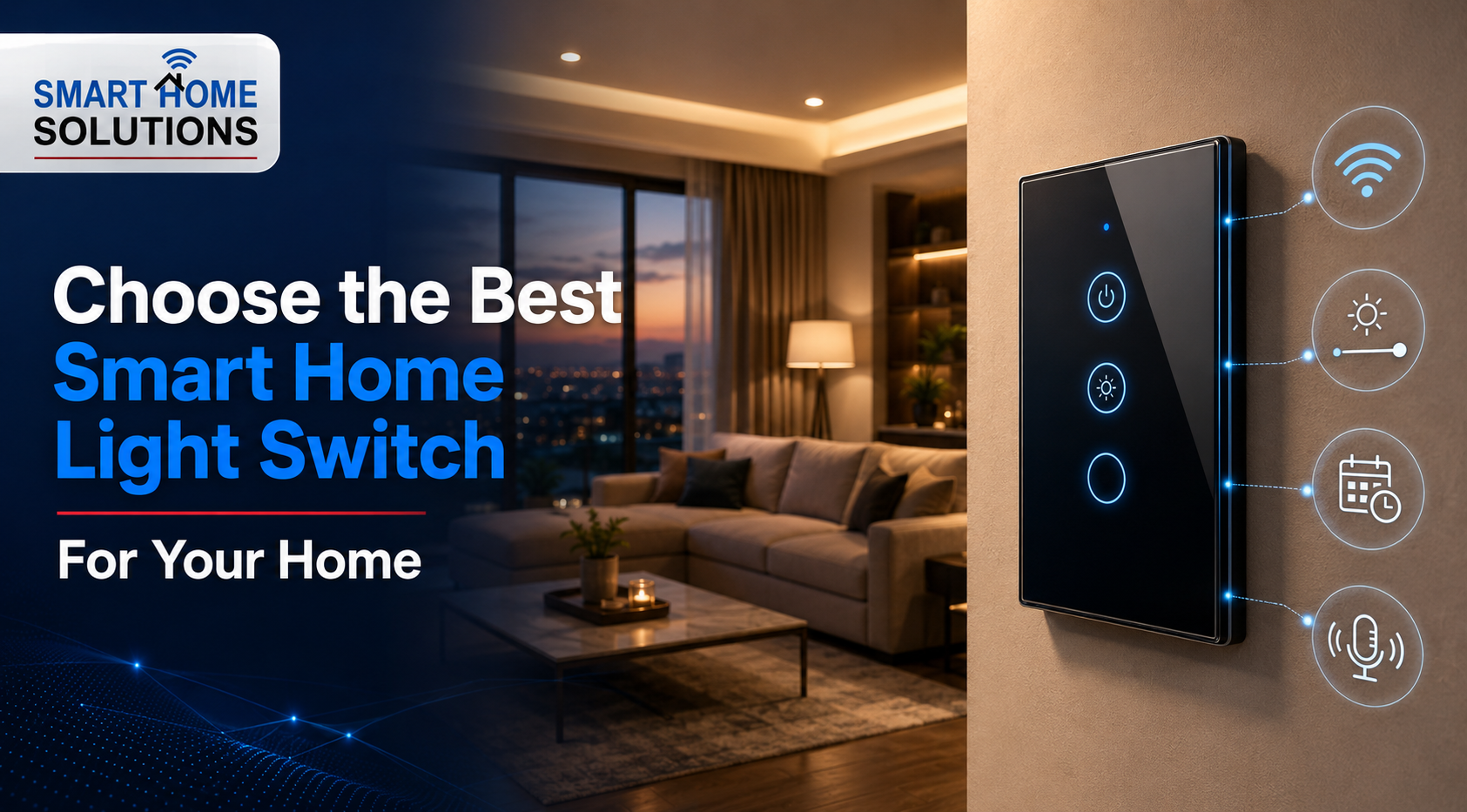
Choosing the right smart home light switch can make everyday lighting more convenient, energy-efficient, and easier to control. Instead of relying only on traditional wall switches, smart switches allow you to operate lights through an app, voice commands, schedules, or automated routines. However, with so many options available, selecting the right switch requires careful consideration of compatibility, connectivity, features, installation, and your home’s specific requirements.
Whether you are upgrading one room or planning complete home automation, understanding the available options can help you make a smarter decision. This guide explains the key factors to consider before buying a smart light switch and how to choose a solution that fits your lifestyle.
What Is a Smart Home Light Switch and How It Works?
A smart light switch is an electronically connected switch that allows you to control your lights beyond the traditional on-and-off function. Depending on the model, you may be able to control lighting using a smartphone app, voice assistant, remote access, schedules, or automated scenes.
Most smart switches connect through technologies such as Wi-Fi, Bluetooth, Zigbee, or other smart-home communication protocols. Some models communicate directly with your home network, while others require a compatible hub or controller.
For example, you could schedule bedroom lights to turn off automatically at bedtime or switch on selected lights before you arrive home. This combination of convenience and automation is one reason smart lighting has become an important part of modern homes.
Check Electrical Compatibility Before Buying Your Switch
One of the first things to check is whether the smart switch is compatible with your home’s existing electrical wiring.
Some smart switches require a neutral wire, while certain models are designed to work without one. Older homes may have different wiring configurations, so it is important to verify the requirements before purchasing a switch.
You should also check:
- Voltage and electrical load requirements
- Single-pole or multi-way switch compatibility
- Bulb and fixture compatibility
- Minimum load requirements
- Installation box dimensions
- Whether professional installation is recommended
If you are uncertain about your home’s wiring, consulting a qualified electrician is safer than attempting installation based on assumptions.
Choose the Right Connectivity for Your Smart Home
Connectivity is another important factor when comparing smart switches. Your choice should depend on the size of your home, internet setup, desired reliability, and existing smart-home ecosystem.
Compare Wi-Fi, Bluetooth, and Hub-Based Switches
Wi-Fi switches for home are popular because they can connect directly to your home’s wireless network. They generally do not require a separate hub, making them convenient for individual rooms or smaller installations.
Bluetooth-based switches can be useful for local control but may have a more limited range depending on the product and environment.
Hub-based technologies such as Zigbee can be suitable for larger smart-home installations. A compatible hub can help connect multiple devices and create more centralized automation.
| Connectivity | Main Advantage | Suitable For |
| Wi-Fi | Direct network connection | Individual rooms and connected homes |
| Bluetooth | Simple local connectivity | Smaller or limited setups |
| Zigbee/Hub | Efficient device networking | Larger smart-home systems |
| Mixed ecosystems | Flexible integration | Advanced automation setups |
Before choosing a model, check whether it works with your existing smart-home devices and preferred platform.
Consider Voice Control and Smart Assistant Support
Voice control can make smart lighting particularly convenient. Instead of physically reaching for a switch, you can use a compatible voice assistant to turn lights on or off.
When comparing products, look for compatibility with the voice assistant ecosystem you already use. You should also check whether the switch supports routines, groups, scenes, and other automation features.
For example, you could create a “Movie Night” scene that dims selected lights or a “Good Morning” routine that switches on specific lights at a scheduled time.
The important point is not simply whether a switch offers voice control, but whether it integrates smoothly with your broader smart-home setup.
Decide Whether You Need Dimming and Advanced Controls
Not every smart switch offers the same level of lighting control. A basic switch may only provide remote on-and-off functionality, while a smart dimmer can adjust brightness.
If you want flexible lighting, check whether the switch supports dimmable LED bulbs and the specific lighting fixtures installed in your home.
Advanced features may include:
- Brightness adjustment
- Lighting schedules
- Scene creation
- Timer functions
- Away-mode automation
- Group control
- Remote access
- Energy monitoring on selected models
Think about how you actually use your lights rather than paying extra for features you may never need.
Select a Wireless Smart Light Switch Carefully
A wireless smart light switch can be useful when you want greater flexibility in controlling lighting. However, “wireless” can refer to different things depending on the product.
Some switches communicate wirelessly with a smart-home network, while others may be battery-powered wireless controllers that work alongside another switching system.
Before buying, determine whether the product is intended to replace your existing wired wall switch or operate as an additional wireless control.
This distinction can prevent compatibility problems and unnecessary purchases.
Check Smart Home Platform Compatibility First
Compatibility should be one of your top priorities. A smart switch may have excellent features, but those features are less useful if it cannot communicate properly with the devices you already own.
Before purchasing, check:
- Which mobile app controls the switch?
- Does it support your preferred voice assistant?
- Does it work with your existing smart-home ecosystem?
- Does it require a separate hub?
- Can multiple switches be managed together?
- Does the manufacturer provide regular software support?
Choosing products from a compatible ecosystem can make future expansion much easier.
Look for Useful Automation and Scheduling Features
Automation is where smart lighting becomes more than simple remote control. A good smart switch can help you create lighting routines based on time, activity, or other connected devices.
For example, you can schedule outdoor lights to switch on in the evening and turn off later at night. Similarly, hallway lighting can be automated around your daily routine.
Motion sensors and other smart devices can also be incorporated into some automation systems. This allows lights to respond to activity instead of requiring manual control every time.
When comparing switches, consider the routines you genuinely want to create. Practical automation is more valuable than a long list of rarely used features.
Think About Security and Remote Access Features
Smart devices are connected to your home network, so security should not be overlooked when considering Home Automation Cost in India. Choose products from established manufacturers and follow recommended security practices. Use strong account credentials, keep apps and firmware updated, and secure your home Wi-Fi network.
Remote access can also be useful. Depending on the product and its cloud services, you may be able to check or control lights while away from home. These features
are important to consider when evaluating the cost of home automation in India, as they can provide added convenience and help create the appearance that someone is home when you are traveling.
Compare Installation Requirements and Costs
Price is important, but the cheapest switch is not always the best value. Consider the total cost of the installation, including compatible bulbs, hubs, accessories, and professional electrical work if required.
If you are replacing several switches, calculate the complete project cost instead of comparing individual product prices.
You should also consider whether the switch fits your home’s interior design. A modern smart switch should provide useful functionality while looking appropriate on the wall.
For complex installations or whole-home automation projects, professional guidance can help ensure that different devices work together correctly.
Choose Smart Switches Based on Your Home Needs?
The best switch for you depends on your specific requirements.
For a simple lighting upgrade, a Wi-Fi switch with app and voice control may be enough. For a larger automated home, you may want hub compatibility, multi-room control, scenes, sensors, and advanced scheduling.
Consider these scenarios:
| Home Requirement | Recommended Priority |
| Basic remote lighting | Wi-Fi connectivity |
| Voice-controlled lights | Voice assistant compatibility |
| Flexible brightness | Dimming support |
| Large smart-home setup | Hub-based ecosystem |
| Automated routines | Scheduling and scene support |
| Existing smart devices | Ecosystem compatibility |
| Older electrical wiring | Wiring compatibility check |
There is no single smart switch that is perfect for every home. The right choice is the one that fits your electrical system, lifestyle, budget, and existing technology.
Why Professional Smart Home Planning Matters?
Installing individual smart switches may seem straightforward, but whole-home automation can become complicated when multiple products and technologies are involved.
A professional smart-home provider can help evaluate your requirements, identify compatible devices, plan automation routines, and create a more integrated system.
Smart Home Solution focuses on creating connected environments where lighting, security, entertainment, and other smart technologies can work together efficiently. Proper planning can also make it easier to expand your system in the future without replacing incompatible equipment.
Final Tips for Choosing the Right Smart Switch
Before making your final purchase, review the following checklist:
- Confirm your home’s wiring requirements.
- Check the switch’s electrical load rating.
- Verify bulb and fixture compatibility.
- Choose the connectivity that suits your network.
- Check compatibility with your smart-home platform.
- Decide whether you need dimming.
- Look for scheduling and automation features.
- Consider security and software updates.
- Compare installation and long-term costs.
- Choose a design that suits your interiors.
Taking these steps can help you avoid compatibility issues and choose a smart lighting system that remains useful as your home automation setup grows.
Upgrade Your Home with Smarter Lighting Today
A smart light switch can be a simple starting point for creating a more connected home. From convenient app-based control to voice commands, scheduling, dimming, and automation, the right solution can make everyday lighting easier and more personalized.
Instead of choosing a switch based only on price or appearance, consider compatibility, connectivity, functionality, security, and future expansion. A well-planned system can provide greater convenience while becoming an important part of your overall home automation setup.
Ready to make your home smarter? Smart Home Solution can help you plan and implement customized smart lighting and home automation solutions based on your requirements. Contact Smart Home Solution today to explore the right smart lighting setup for your home and take the next step toward a more convenient, connected lifestyle.
Frequently Asked Questions About Smart Light Switches
1. What is the best smart home light switch for beginners?
A Wi-Fi-enabled smart switch can be a convenient starting point for beginners because many models connect directly to a home network without requiring a separate hub. However, wiring and platform compatibility should always be checked before purchase.
2. Do smart light switches work without Wi-Fi?
It depends on the specific product. Some smart switches rely on Wi-Fi for remote and app-based control, while others use Bluetooth, Zigbee, or another communication method. Check the manufacturer’s specifications before choosing a switch.
3. Do smart switches require a neutral wire?
Some smart switches require a neutral wire, while others are specifically designed to operate without one. Since electrical wiring varies between homes, verify the switch requirements before installation.
4. Can I control a smart light switch with my phone?
Yes, many smart switches can be controlled through a dedicated mobile application. Depending on the model, you may also be able to schedule lights, create scenes, manage multiple switches, and control lighting remotely.
5. Are smart light switches worth installing?
Smart switches can be worthwhile if you want convenient control, automation, scheduling, voice operation, or integration with other smart-home devices. The value depends on your home’s requirements and how you plan to use smart lighting.