Modern technology is changing the way we live and work. Today, homes and buildings automation solutions are making residential and commercial spaces smarter, safer, and more energy-efficient. From controlling lights with a smartphone to managing security systems remotely, automation delivers convenience while reducing energy consumption and operating costs.
Whether you’re planning a new smart home or considering a home automation upgrade for an existing property, understanding the available solutions can help you make the right investment. In this guide, you’ll discover how automation works, its benefits, estimated home automation cost, essential features, and how to choose the best system for your needs.
What Are Homes and Buildings Automation Solutions?
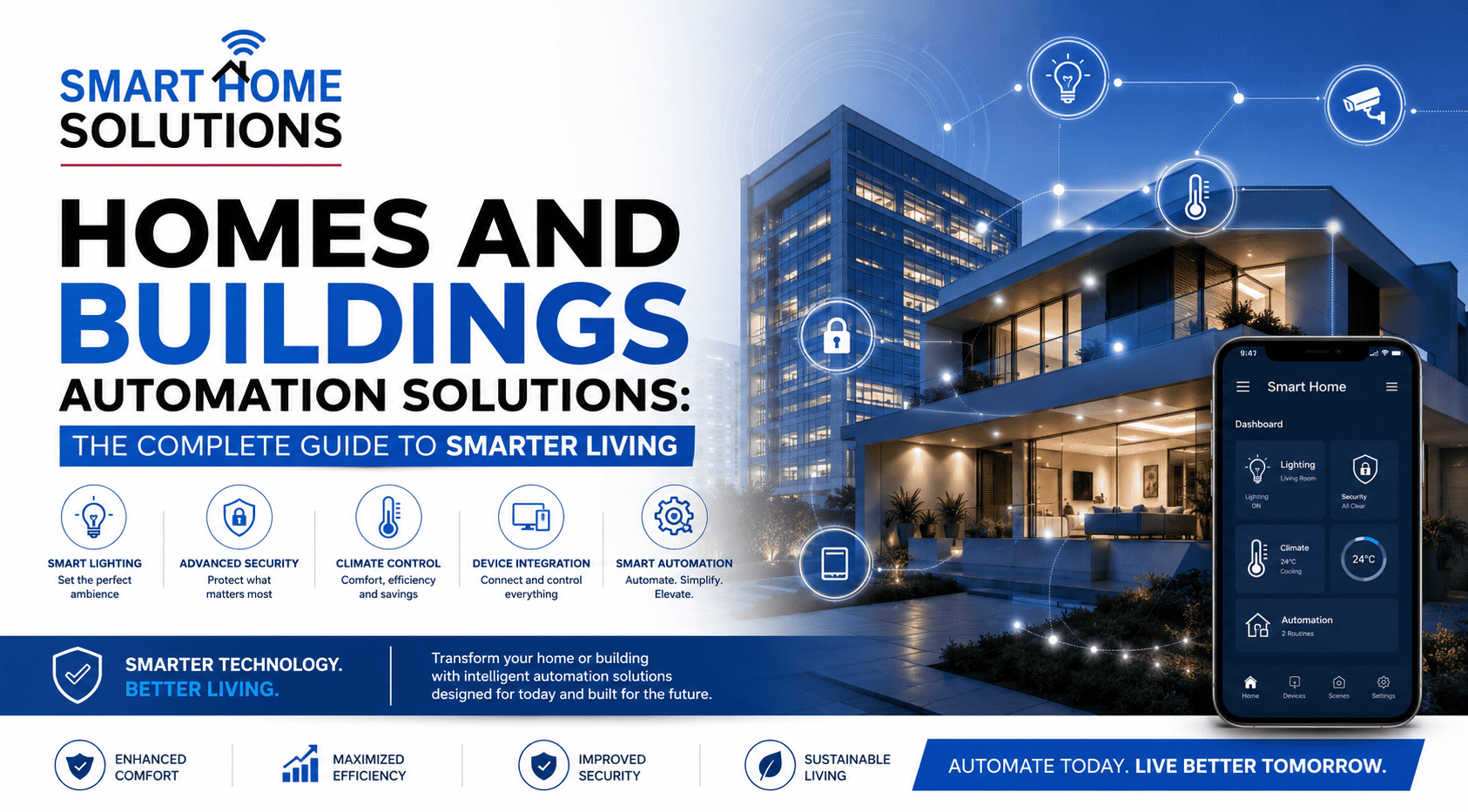
Homes and buildings automation solutions refer to integrated technologies that automate and control various systems within a property. These include lighting, climate control, security, entertainment, energy management, and access control, all managed through a centralized platform.
Instead of operating devices individually, automation allows users to control everything using:
- Mobile apps
- Voice assistants
- Touch panels
- Smart switches
- Automated schedules
- Sensors and motion detection
These systems create a connected environment where devices communicate with each other, improving comfort and efficiency.
Why Smart Automation Is Becoming Essential?
Technology has evolved from being a luxury to becoming a practical necessity. Homeowners and businesses are adopting automation because it simplifies daily life while increasing property value.
Some major reasons include:
- Better energy management
- Enhanced security
- Remote monitoring
- Greater convenience
- Improved comfort
- Reduced maintenance
- Increased property appeal
Whether it’s a villa, apartment, office, hotel, or commercial building, automation offers long-term benefits that go beyond convenience.
Key Features of Modern Automation Systems
A complete automation solution combines multiple smart technologies into one ecosystem.
Smart Lighting Control
Lighting automation lets you control brightness, color temperature, and schedules through your smartphone or voice commands.
Benefits include:
- Automatic ON/OFF schedules
- Motion-activated lighting
- Energy savings
- Mood lighting scenes
- Remote control
Smart Climate Control
Heating, ventilation, and air conditioning (HVAC) systems can automatically adjust based on occupancy, weather, or personal preferences.
Advantages include:
- Better comfort
- Lower electricity bills
- Consistent indoor temperature
- Remote temperature adjustment
Intelligent Security Systems
Modern security systems include:
- Smart CCTV
- Video doorbells
- Motion sensors
- Door/window sensors
- Smart locks
- Intrusion alarms
Users receive instant notifications whenever suspicious activity is detected.
Smart Entertainment
Entertainment systems can also become part of your automation network.
Examples include:
- Multi-room audio
- Home theater automation
- Voice-controlled TVs
- Streaming integration
Everything can be managed from a single interface.
Automated Curtains and Blinds
Motorized curtains improve comfort while enhancing energy efficiency.
They can automatically:
- Open at sunrise
- Close at sunset
- Adjust based on sunlight
- Integrate with climate control
Benefits of Homes and Buildings Automation Solutions
Installing homes and buildings automation solutions offers advantages that extend well beyond convenience.
Improved Energy Efficiency
Smart systems monitor electricity usage and automatically reduce unnecessary consumption.
For example:
- Lights switch off when rooms are empty.
- HVAC adjusts automatically.
- Appliances operate only when needed.
This results in lower utility bills.
Enhanced Safety
Automation improves home security through:
- Real-time alerts
- Remote surveillance
- Smart locking systems
- Fire and smoke detection
- Water leak monitoring
These features provide peace of mind whether you’re at home or away.
Greater Comfort
Imagine waking up to:
- Curtains opening automatically
- Coffee machine starting
- Comfortable room temperature
- Soft lighting
Automation creates personalized experiences without manual effort.
Remote Access
One of the biggest advantages is remote control.
Using your smartphone, you can:
- Lock doors
- Check CCTV cameras
- Turn off lights
- Control air conditioning
- Receive security alerts
This flexibility is especially useful for travelers and busy professionals.
Home Automation Cost: What Affects the Price?
Many people assume automation is extremely expensive, but today’s solutions are available for different budgets.
The actual home automation cost depends on several factors.
| Factor | Impact on Cost |
| Property size | Larger properties require more devices |
| Number of rooms | More rooms increase installation requirements |
| Features selected | Security, lighting, HVAC, audio, and access control affect pricing |
| Wired vs wireless systems | Wired systems generally cost more to install |
| Brand and equipment quality | Premium products have higher initial costs |
| Custom programming | Advanced automation increases setup costs |
Although the initial investment varies, automation often reduces long-term energy expenses and increases property value.
Signs You Need a Home Automation Upgrade
Technology evolves quickly.
If your current system is several years old, a home automation upgrade can unlock new capabilities.
Consider upgrading if:
- Devices frequently disconnect
- Security cameras have poor resolution
- Voice assistants aren’t supported
- Energy monitoring is unavailable
- Mobile apps feel outdated
- Systems don’t integrate with newer smart devices
Modern platforms offer faster performance, better security, and greater compatibility.
Residential vs Commercial Automation
Automation benefits both homes and businesses, although their requirements differ.
| Residential | Commercial |
| Smart lighting | Building-wide lighting control |
| Smart locks | Access control systems |
| CCTV monitoring | Multi-floor surveillance |
| Voice assistants | Centralized facility management |
| Home theater | Conference room automation |
| Smart HVAC | Energy management systems |
Commercial buildings often require centralized management for multiple users, while homes focus more on convenience and personalization.
How to Choose the Right Automation Solution?
Selecting the right automation system requires careful planning.
Consider these factors:
Identify Your Goals
Ask yourself:
- Do you want better security?
- Lower electricity bills?
- Greater convenience?
- Entertainment automation?
Your priorities determine the right system.
Choose Scalable Technology
A good automation platform should allow future expansion.
For example, you may initially automate lighting and later add:
- Smart security
- HVAC control
- Smart irrigation
- Audio systems
Scalability protects your investment.
Prioritize Compatibility
Ensure devices work together seamlessly.
Look for compatibility with popular voice assistants and mobile operating systems.
Focus on User-Friendly Control
A complicated interface reduces usability.
The best systems offer:
- Simple dashboards
- Mobile apps
- Voice commands
- Quick automation routines
Work with Experienced Professionals
Professional installation ensures:
- Reliable performance
- Proper wiring
- Secure configuration
- Future support
Choosing experienced experts helps avoid costly installation mistakes.
Future Trends in Smart Building Automation
Automation continues to evolve rapidly.
Some exciting trends include:
Artificial Intelligence
AI can learn user habits and automatically optimize lighting, climate, and energy usage.
Predictive Maintenance
Smart sensors identify equipment problems before failures occur, reducing maintenance costs.
Energy Analytics
Advanced dashboards provide detailed reports on electricity usage, helping users reduce waste.
Voice and Gesture Control
Natural interaction through voice and gesture recognition is becoming increasingly common.
Sustainable Smart Buildings
Automation supports eco-friendly living by minimizing energy consumption and integrating renewable energy systems.
Why Choose Smart Home Solution?
Choosing the right technology partner is just as important as selecting the right automation system.
Smart Home Solution delivers customized homes and buildings automation solutions designed to improve safety, convenience, and energy efficiency. From consultation and system design to professional installation and ongoing support, every solution is tailored to meet the unique requirements of residential and commercial properties.
Whether you’re planning a smart home, office, hotel, or commercial building, Smart Home Solution helps you implement reliable automation technologies that are scalable, user-friendly, and built for the future.
Final Thoughts
The future of modern living lies in intelligent automation. Whether you’re looking to improve comfort, strengthen security, reduce energy bills, or increase property value, homes and buildings automation solutions provide a smart and future-ready investment.
As technology continues to evolve, now is the perfect time to consider a home automation upgrade that meets your current needs while preparing your property for tomorrow.
With expert planning and professional installation from Smart Home Solution, you can enjoy a safer, smarter, and more connected lifestyle.
Frequently Asked Questions
1. What are homes and buildings automation solutions?
They are integrated smart systems that automate lighting, security, climate control, entertainment, energy management, and other building functions through centralized control.
2. How much does home automation cost?
The home automation cost depends on property size, selected features, installation type, and the number of connected devices. Basic systems are more affordable, while fully integrated smart homes require a larger investment.
3. Is a home automation upgrade worth it?
Yes. A home automation upgrade improves security, energy efficiency, convenience, and compatibility with the latest smart devices, making it a valuable long-term investment.
4. Can automation help reduce electricity bills?
Yes. Smart lighting, climate control, occupancy sensors, and energy monitoring reduce unnecessary energy consumption, helping lower monthly utility costs.
5. Can automation systems be controlled remotely?
Absolutely. Most modern automation systems allow users to control lights, security cameras, locks, HVAC, and other connected devices remotely using a smartphone or tablet from anywhere with an internet connection.